The goal is invisibility, not features
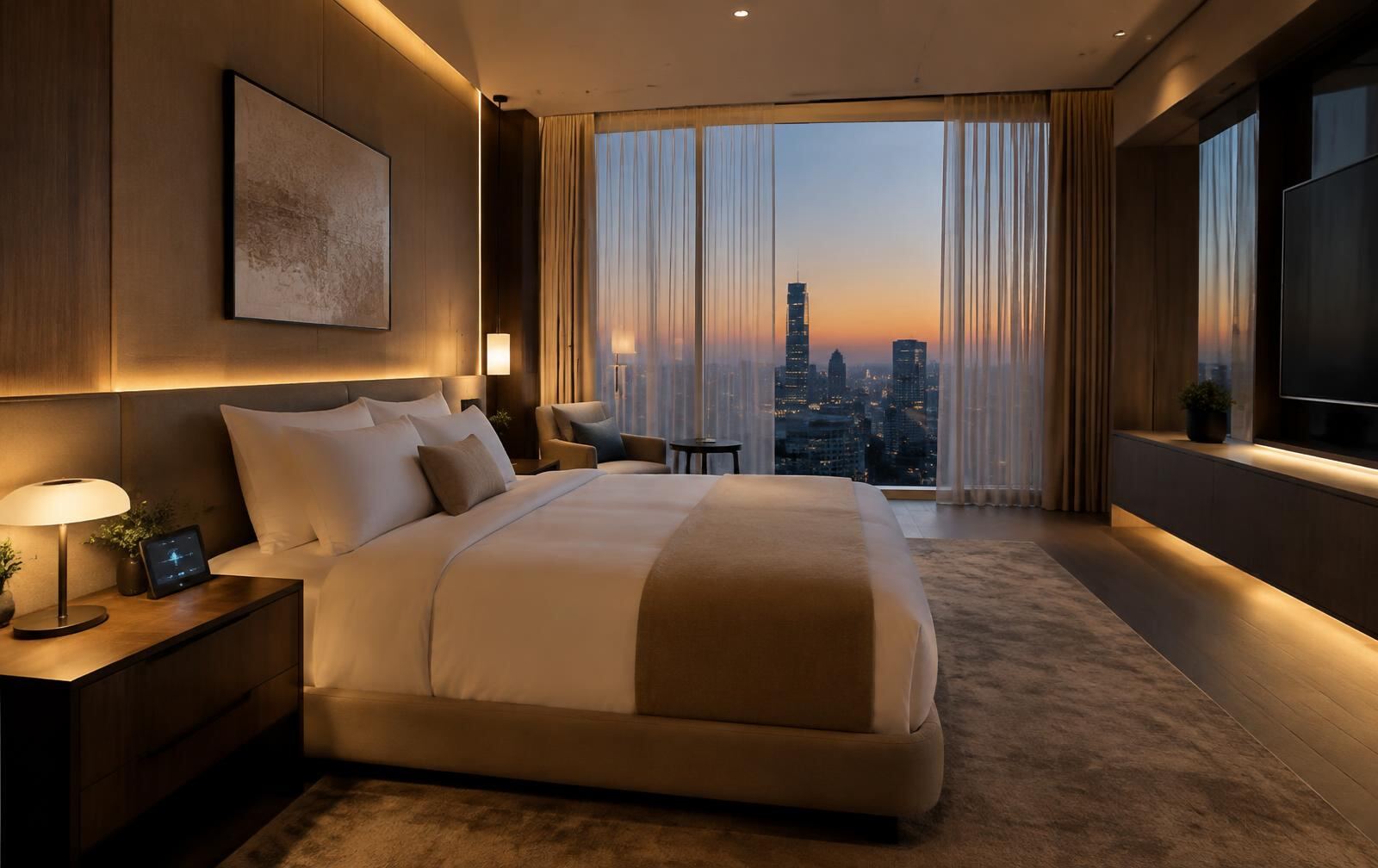
When I design a Guest Room Management System, the brief I give myself is that a guest should never have to think about it. Lights should come up gently when they enter, the room should already be at a sensible temperature, and the 'do not disturb' they set at the door should be respected without exception. The moment a guest notices the automation — because it's slow, inconsistent, or does something unexpected — the system has failed its real job, regardless of how impressive the feature list looks on paper.
A GRMS brings together lighting, HVAC, occupancy sensing, door status, and often minibar or curtain control, under one coordinated logic per room. Done well, it quietly improves comfort and lowers energy use. Done badly, it becomes the thing engineering gets called about every night.
Comfort and occupancy logic
Occupancy detection is the backbone of a good GRMS, because almost every other function in the room reacts to it: lighting scenes, HVAC setback, and housekeeping status. I design occupancy logic in layers rather than relying on a single sensor type, because any one method has blind spots — a guest sitting very still can be missed by motion-only detection, for instance.
- Combine door/key-card state with presence detection, rather than relying on either alone.
- Give HVAC a sensible setback when a room is confirmed unoccupied, and a clear recovery time before a guest is expected back, rather than an abrupt full-power jump.
- Keep a manual override always available at the room's own switches — automation should assist a guest's choices, never fight them.
- Design 'welcome' and 'departure' scenes as clearly defined states, not a vague default the room drifts back to.
DND and Make-Up-Room: get this absolutely right
The Do Not Disturb / Make-Up-Room (DND/MUR) indicator at the door is one of the most safety- and trust-critical parts of any GRMS, because it directly governs whether staff enter a room. This is a standard, well-documented element of hotel guest room automation, and manufacturer specifications for GRMS systems treat it as a dedicated control point rather than an afterthought bolted onto a lighting panel [1].
I treat the DND/MUR signal path as its own mini-system within the room: it needs to update instantly when the guest changes it, display unambiguously in the corridor, and report reliably back to the property management or housekeeping system so staff never have to guess. If a DND/MUR integration is flaky, it isn't a minor bug — it's a guest privacy and trust issue, and I prioritise fixing it over almost anything else in the room.
Integration with hotel systems
A GRMS rarely sits in isolation. It typically needs to talk to the property management system (for occupancy and check-in/out status), sometimes to guest-facing apps or in-room tablets, and to the building's central building management system for energy reporting. Industry guest room automation documentation describes this as a layered architecture — room-level control, a management/supervision layer, and integration out to property and energy systems — and I design and specify against that same layered logic so each layer can be tested and maintained independently [2].
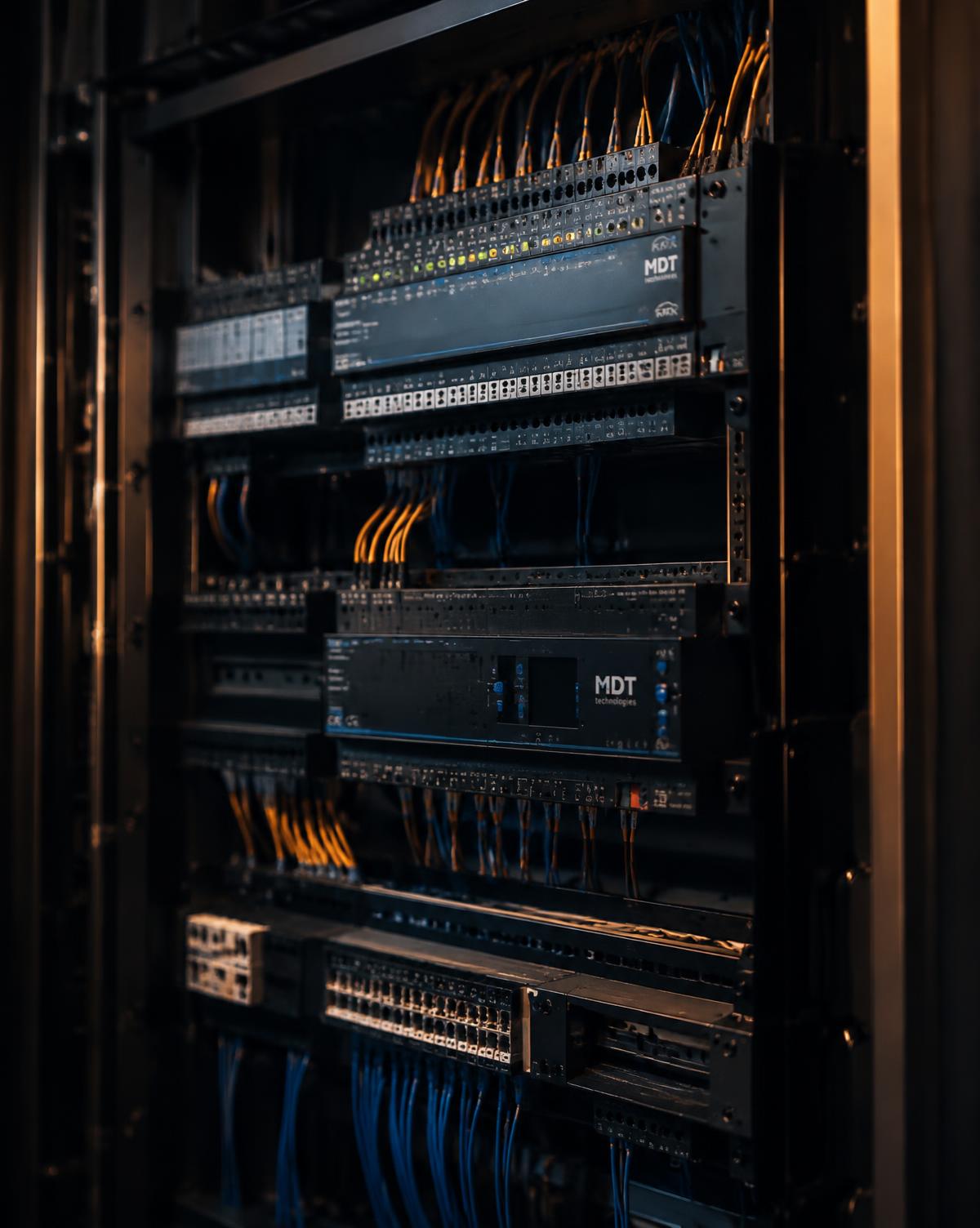
Open standards matter here. I favour KNX for the field-level control in a GRMS specifically because it's a published, multi-vendor standard rather than a closed, single-supplier protocol, which keeps long-term maintenance and future device choices open rather than locking an operator into one manufacturer's roadmap [3].
Guest privacy checklist
Privacy isn't only about DND. A handful of design decisions determine whether guests feel comfortable in an automated room or subtly surveilled by one.
- Avoid any occupancy or presence technology in guest rooms that can identify individuals rather than simply detect presence.
- Be explicit, in guest-facing materials, about what the room automation does and does not record.
- Keep control of lighting, climate and privacy settings genuinely local to the room — avoid designs where remote staff access feels intrusive rather than supportive.
- Make sure any guest-facing app or tablet integration can be fully disabled by the guest without losing basic room function.
Electrical and commissioning note
All mains-voltage wiring, distribution board work, and fixed electrical installation for a GRMS must be carried out by qualified, licensed electricians in line with local regulations. My role is system design, device specification, programming and commissioning — and I always check the specific manufacturer's installation and wiring requirements for the room controllers and sensors being used, since these details vary between product ranges and are updated over time.