Why I start with the room, not the receiver
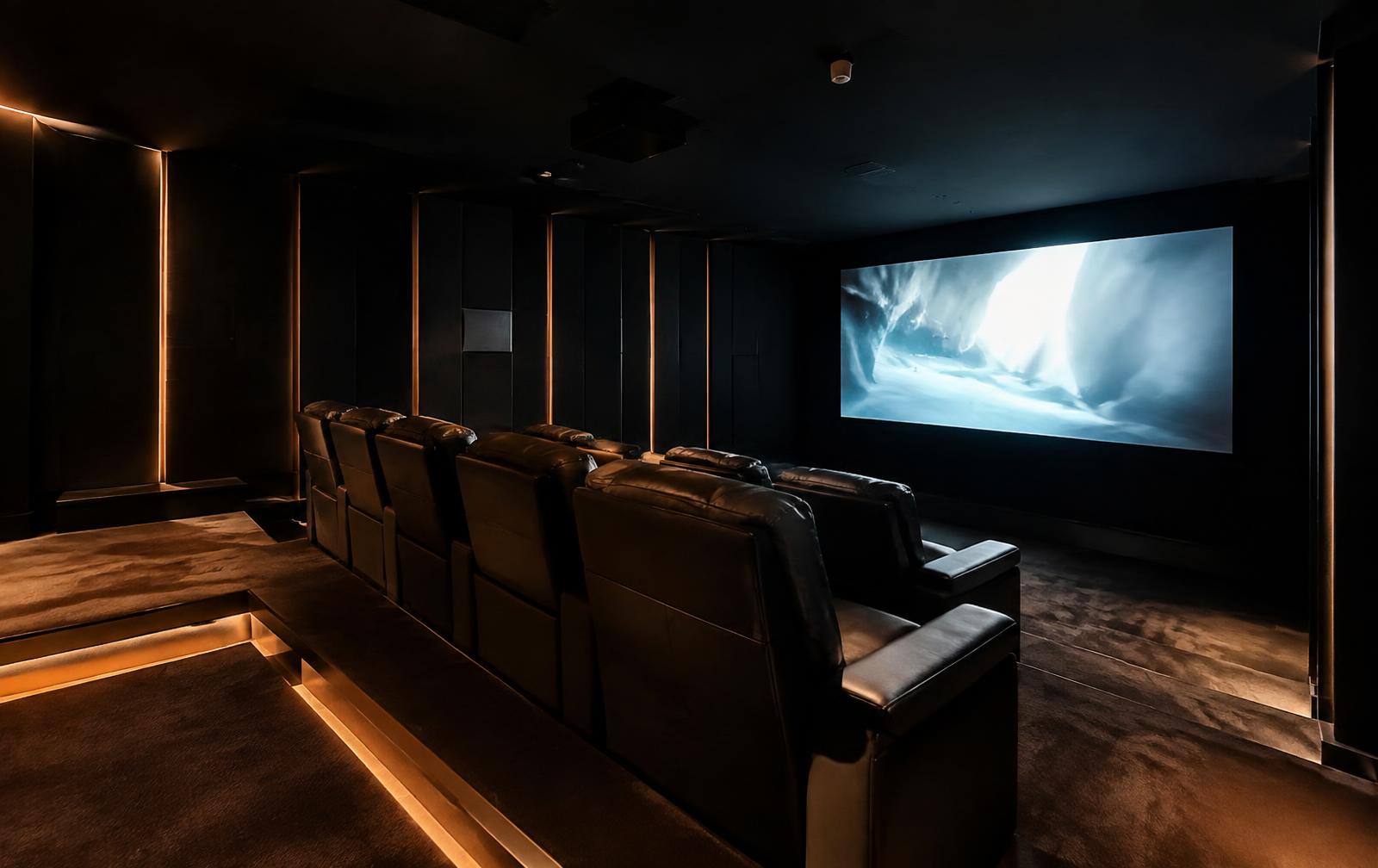
I recommend starting with the room, not the equipment list. Choosing a receiver, projector and speakers first and then trying to make them fit the room leads to compromises. Before I think about brands or channel counts, I want to understand the room itself: its shape, what it's built from, where the seating realistically has to go, and how the household actually wants to use it — films most nights, the odd sports evening, music, or all three.
The reason I insist on this order is simple. A room's proportions, its openings, and what's behind the walls affect what any sound system can do in it far more than the badge on the speaker. If I choose the layout and intent first, the equipment list writes itself. If I choose the equipment first, I spend the rest of the project trying to force a room to behave like a showroom it was never built to be.
The order I actually work in
I treat this as a sequence, not a shopping list. Skipping a step usually shows up later as a compromise nobody chose on purpose.
- Confirm the room's real use: dedicated cinema, multi-use living space, or something in between.
- Map the seating layout first — every speaker position is described relative to where people actually sit.
- Note the room's construction and finishes (hard floors, large glass, open doorways) before specifying anything, since these change how a space behaves.
- Decide on screen technology (projector and screen, or a large display) based on ambient light in the room, not on a spec sheet alone.
- Only then select a channel layout and equipment, matched to the room and seating you've already settled on.
- Plan containment and cable routes before first fix, so speaker and screen positions aren't dictated by where a cable happens to reach.
Working from an official layout reference
Rather than inventing speaker positions from habit, I work from the manufacturer guidance for whatever surround format the household wants to use. Dolby publishes a clear step-by-step guide to planning a home theatre room and a set of speaker placement guides for the common Atmos-enabled layouts, and I use these as my starting reference point for every project, then adapt them to the real room [1] [2].
I say 'starting reference' deliberately. A published layout assumes an ideal, empty box. Real rooms have a sofa against one wall, a door where a surround speaker would ideally sit, or a ceiling that can't easily take an overhead speaker. My job is to apply the logic behind the official guidance — seating position first, a clear path between listener and speaker, symmetry where it's achievable — and adapt it honestly where the room won't allow the textbook answer.
Screen and projector placement follow the same logic
Once the seating and speaker layout are settled, the screen position usually becomes obvious: it sits at the focal point the speaker layout was already built around. I check throw distance and lens options against the specific projector being considered, rather than assuming one model's numbers apply to another — projector optics vary enough between models that this has to be checked against that unit's own documentation.
Ambient light matters as much as throw distance. A room with any daylight or spill from an adjoining space needs either reliable blackout or a screen and projector combination suited to some ambient light. I'd rather raise this early, while shading or a different room is still an option, than after the screen is mounted.
What I leave to qualified trades
Everything above is design and layout work. The actual electrical supply for a projector, powered subwoofer, or in-wall speaker wiring must be installed by a qualified, licensed electrician, to the applicable local regulations and to the manufacturer's installation requirements for that specific product. I plan containment, power requirements and device locations. Electrical installation must be carried out by suitably qualified trades; I coordinate the design requirements. Always confirm final requirements against the manufacturer's own installation manual before anything is fixed in place — ratings, clearances and mounting methods do change between models and revisions.
If you take one thing from this article, let it be the ordering: room and seating first, layout second, equipment third. Everything downstream — acoustics, calibration, day-to-day enjoyment — gets easier when the sequence is right from the start.